
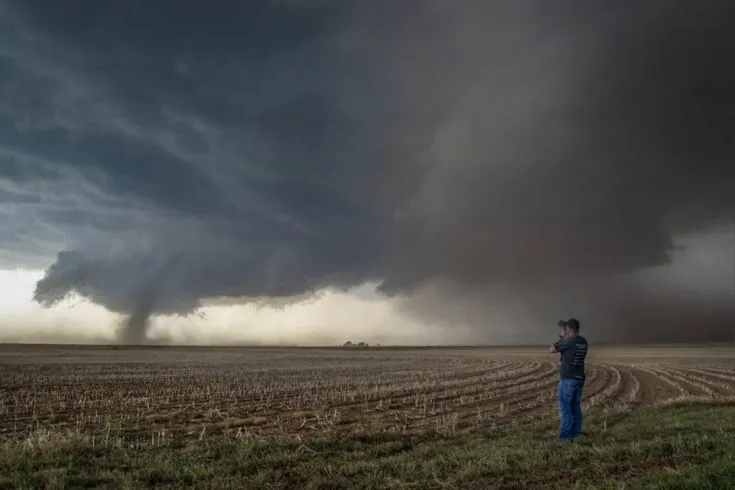
A single photograph can capture an impressive sky, but it cannot always explain how that scene developed. Storms evolve continuously, and the landscape beneath them can change just as dramatically as clouds grow, precipitation arrives, and daylight begins to fade. Travelers interested in storm chasing 2027 can use photography to document this progression rather than concentrating entirely on one standout image.
Thinking in sequences changes the way a photographer approaches a chase. Instead of waiting for the most dramatic weather, each stage becomes worth recording. A calm morning landscape, growing afternoon clouds, an organized storm, and a colorful evening horizon can work together to tell the complete story of a day on the Plains.
Begin Before the Weather Becomes Dramatic
The first useful photograph may come long before thunderstorms appear. A quiet highway, open farmland, or scattered clouds can establish where the day’s journey began. These early images might not seem particularly exciting when taken. Their value becomes clearer later when they are placed beside photographs showing how much the sky changed.
Including calm conditions also creates visual contrast. Without them, a collection of dramatic storm images may show the weather but reveal very little about the progression of the day.
Use the Landscape as a Reference Point
Photographing clouds against an empty sky can make their scale difficult to understand. Including recognizable landscape features provides context. Fields, roads, fences, distant buildings, and the horizon can all help viewers understand the size of developing storms. They also connect the photographs specifically to the Great Plains.
There is no need to include every available element. One simple foreground feature is often enough to establish scale while allowing the sky to remain dominant.
Document the Growth of the Sky
Cloud development can happen gradually enough that travelers do not immediately realize how much has changed. Taking occasional photographs provides a visual record. An early cloud tower may occupy only a small portion of the horizon. Later photographs could show a much larger and more organized thunderstorm in the same general direction.
This progression is particularly interesting when images are reviewed after the trip. Details that seemed minor during the chase can become important parts of the sequence.
Change Perspective as Conditions Evolve
Someone considering tornado tours USA 2027 should not expect storm photography to happen from one permanent viewpoint. As weather moves and the group repositions, the appearance of the same storm can change considerably.
Rather than trying to reproduce the same composition repeatedly, photographers can take advantage of each new perspective.
A useful sequence might include:
-
An establishing landscape
-
Early cloud development
-
A wide view of storm structure
-
Rainfall across the horizon
-
Changing light around the storm
-
A distant view as weather moves away
-
The evening landscape after the chase
Together, these images provide a stronger narrative than several nearly identical photographs.
Include Details Between the Big Scenes
Not every photograph needs to show an enormous storm. Smaller details can help connect the main images. Interesting subjects might include textured clouds, light falling across farmland, an empty road beneath a changing sky, or distant rainfall.
These quieter photographs provide breathing room within a collection. They also preserve aspects of the journey that can be forgotten when attention is focused only on the day’s most dramatic weather.
Let Evening Provide a Natural Ending
The final stage of the sequence can be completely different from the middle of the chase. As storms move away and daylight changes, the Plains may take on a quieter appearance. Departing clouds, distant lightning, illuminated rain, or a colorful horizon can provide a natural conclusion to the photographic story. Even a simple image of the road after active weather has ended can work well because it communicates that the day’s journey is moving toward its close.
Avoid Photographing Every Second
Sequence photography does not mean continuously pressing the shutter. Hundreds of nearly identical images can make it harder to identify the photographs that actually show meaningful changes.
A more deliberate approach is often better. Travelers can observe first, decide what has changed, and photograph when the scene contributes something new. This leaves more time to experience the weather directly while still creating a useful record.
Organize the Story Afterward
Reviewing images in chronological order can reveal a story that was difficult to recognize while traveling. Photographers can select a smaller group that represents the beginning, development, peak, and conclusion of the day. Brief location or weather notes can add useful context.
Over several chase days, these individual sequences can become a detailed visual diary of the entire journey.
Conclusion
Photographing storm chasing as a sequence encourages travelers to notice the full progression of a weather day. Quiet landscapes, developing clouds, mature storms, changing light, and evening skies each contribute something different to the story.
With Storm Chasing Adventure Tours, photography-minded guests can document the Plains as an evolving environment, creating collections that preserve not simply one dramatic moment but the character of the entire chase.