
Introduction
The Everest region is one of the world’s most iconic trekking destinations, attracting thousands of adventurers every year. Towering Himalayan peaks, traditional Sherpa villages, ancient monasteries, and breathtaking glaciers create an unforgettable experience for trekkers of all skill levels. Whether your dream is to stand at Everest Base Camp or explore quieter trails with equally spectacular scenery, planning your journey carefully is essential.
Understanding the Everest trek itinerary and cost helps travelers prepare their budget and schedule while choosing the most suitable route. At the same time, many hikers are discovering Everest trekking alternatives that offer incredible mountain views without the crowds or demanding physical challenges.
This guide covers everything you need to know about trekking in the Everest region, including detailed itineraries, estimated costs, and the best alternative routes.
Why Choose an Everest Trek?
The Everest region is more than just the home of the world’s highest mountain. It is a place where culture, adventure, and nature come together.
Highlights include:
- Stunning views of Mount Everest (8,848.86 meters)
- Traditional Sherpa villages and hospitality
- Ancient Buddhist monasteries
- Suspension bridges over deep valleys
- Diverse landscapes from forests to glaciers
- Opportunity to experience Himalayan wildlife
Every day on the trail brings new scenery and unforgettable memories.
Standard Everest Trek Itinerary and Cost
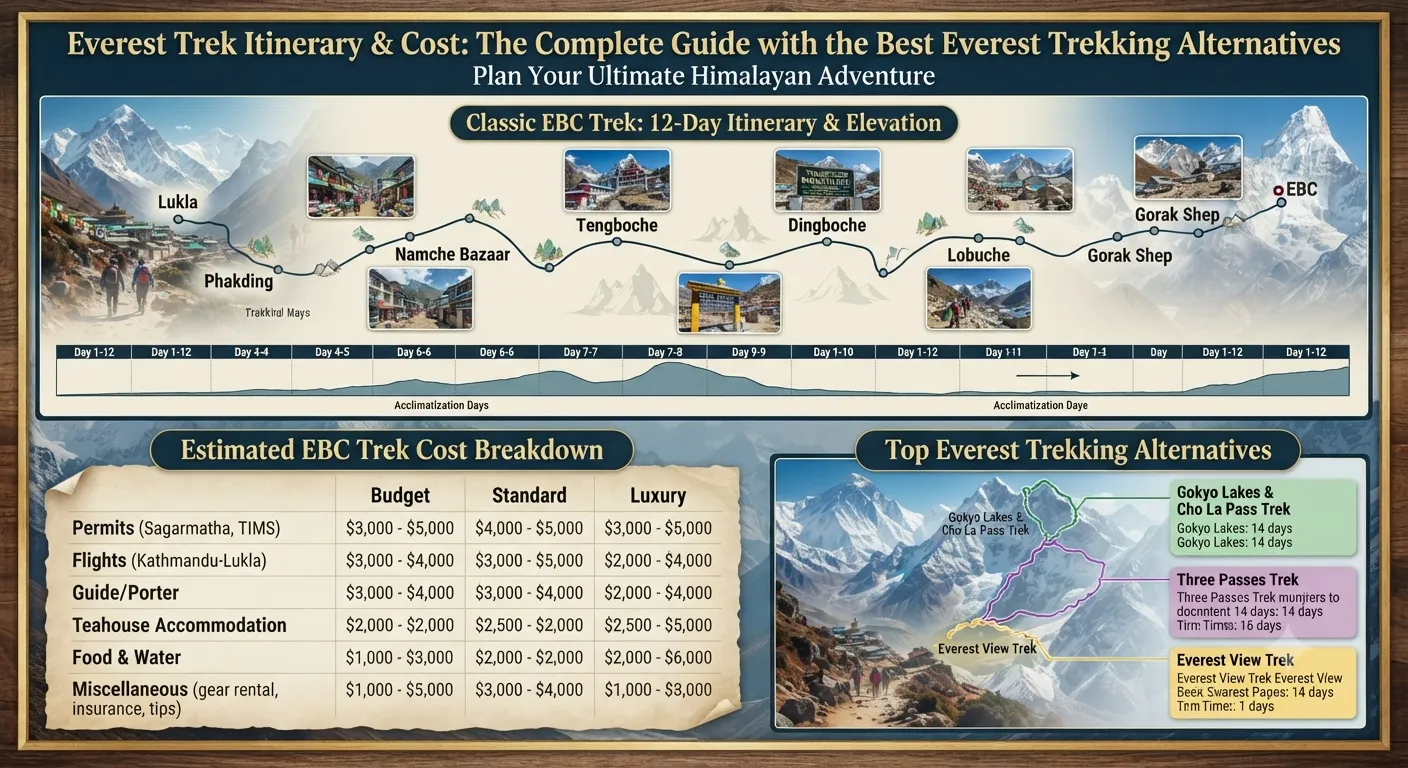
The classic Everest Base Camp Trek usually takes between 12 and 14 days, allowing trekkers to acclimatize properly while enjoying the journey.
Day 1: Arrival in Kathmandu
- Airport transfer
- Trek preparation
- Equipment check
- Overnight in Kathmandu
Day 2: Flight to Lukla and Trek to Phakding
- Flight duration: 30–40 minutes
- Trekking time: 3–4 hours
Day 3: Phakding to Namche Bazaar
- Trekking time: 6–7 hours
- First views of Everest on a clear day
Day 4: Acclimatization Day
Explore Namche Bazaar and hike to Everest View Hotel for panoramic mountain scenery.
Day 5: Namche to Tengboche
Visit the famous Tengboche Monastery while enjoying incredible views of Ama Dablam.
Day 6: Tengboche to Dingboche
Gradually gain altitude while passing beautiful alpine landscapes.
Day 7: Acclimatization in Dingboche
Short hike to improve altitude adaptation.
Day 8: Dingboche to Lobuche
Walk alongside memorial sites dedicated to climbers.
Day 9: Lobuche to Gorak Shep and Everest Base Camp
Reach the legendary Everest Base Camp and return to Gorak Shep.
Day 10: Kala Patthar Sunrise and Trek to Pheriche
Witness one of the best panoramic views of Everest before descending.
Day 11: Pheriche to Namche Bazaar
Return through familiar villages and forests.
Day 12: Namche to Lukla
Celebrate the completion of your adventure.
Day 13: Flight to Kathmandu
Relax and explore the city.
Day 14: Departure
Transfer to the airport.
Everest Trek Itinerary and Cost Breakdown
The total cost depends on your travel style, guide services, accommodation preferences, and transportation choices.
Budget Trek
Approximate cost: USD 900–1,200
Includes:
- Basic accommodation
- Local tea houses
- Shared transportation
- Guide and permits
Standard Trek
Approximate cost: USD 1,300–1,800
Includes:
- Comfortable lodges
- Domestic flights
- Professional guide
- Porter services
- Meals during the trek
Luxury Trek
Approximate cost: USD 2,500–5,000+
Includes:
- Luxury lodges
- Premium meals
- Private guide
- Helicopter return options
- Personalized services
Major Expenses
Trekking Permits
Trekkers require:
- Sagarmatha National Park Permit
- Khumbu Rural Municipality Permit
Flights
Kathmandu to Lukla flights represent a significant portion of the budget.
Accommodation
Tea houses offer:
- Twin-sharing rooms
- Simple beds
- Shared bathrooms
- Warm dining halls
Luxury lodges provide private rooms and modern facilities.
Food
Typical meals include:
- Dal Bhat
- Fried rice
- Noodles
- Soups
- Pancakes
- Tea and coffee
Prices increase as altitude rises because supplies are carried by porters or yaks.
Guide and Porter
Hiring experienced local staff enhances safety and supports the local economy.
Best Time for Everest Trekking
Spring (March to May)
Advantages:
- Stable weather
- Blooming rhododendron forests
- Excellent visibility
- Comfortable temperatures
Autumn (September to November)
Advantages:
- Clear mountain views
- Dry trails
- Pleasant trekking conditions
- Peak trekking season
Winter and monsoon seasons are possible but require additional preparation.
Everest Trekking Alternatives
Not everyone wants the busy Everest Base Camp route. Fortunately, several excellent Everest trekking alternatives offer beautiful scenery and unique experiences.
Gokyo Lakes Trek
The Gokyo Lakes Trek is one of the best alternatives for travelers seeking fewer crowds.
Highlights:
- Turquoise glacial lakes
- Gokyo Ri viewpoint
- Ngozumpa Glacier
- Stunning Everest panorama
Duration: 12–14 days
Difficulty: Moderate
Everest Panorama Trek
Perfect for beginners and families.
Features include:
- Namche Bazaar
- Tengboche Monastery
- Everest viewpoints
- Lower altitude trekking
Duration: 7–9 days
Difficulty: Easy to Moderate
Three Passes Trek
Ideal for experienced trekkers looking for adventure.
Includes:
- Kongma La Pass
- Cho La Pass
- Renjo La Pass
- Everest Base Camp
- Gokyo Lakes
Duration: 18–21 days
Difficulty: Challenging
Pikey Peak Trek
One of Nepal’s hidden gems.
Benefits:
- Incredible sunrise views
- Peaceful villages
- Rich Sherpa culture
- Fewer tourists
Duration: 5–8 days
Difficulty: Moderate
Ama Dablam Base Camp Trek
This route showcases one of the Himalayas’ most beautiful mountains.
Highlights:
- Remote valleys
- Traditional settlements
- Amazing photography opportunities
Duration: 10–12 days
Difficulty: Moderate
Why Choose Everest Trekking Alternatives?
Alternative routes provide several advantages:
- Less crowded trails
- Lower trekking costs
- Greater cultural immersion
- Flexible itineraries
- Excellent mountain views
- Suitable for different fitness levels
Many travelers discover these routes offer a more peaceful and authentic Himalayan experience.
Tips for Planning Your Trek
Before starting your journey:
- Train with regular hiking and cardio exercises.
- Purchase comprehensive travel insurance.
- Pack warm layers and quality trekking boots.
- Stay hydrated throughout the trek.
- Walk slowly to reduce altitude sickness risk.
- Include acclimatization days in your itinerary.
- Respect local customs and environmental guidelines.
Proper preparation significantly improves your overall trekking experience.
Choosing Between Everest Base Camp and Alternative Routes
If your goal is reaching the world’s most famous trekking destination, the classic Everest Base Camp route is the perfect choice. However, if you prefer quieter trails, unique landscapes, or shorter adventures, Everest trekking alternatives like Gokyo Lakes or Pikey Peak provide equally rewarding experiences.
Your decision should depend on:
- Available time
- Budget
- Physical fitness
- Trekking experience
- Preferred level of adventure
Conclusion
Planning the perfect Himalayan adventure begins with understanding the Everest trek itinerary and cost. From permits and accommodation to guides and transportation, knowing the expected expenses allows travelers to prepare with confidence.
At the same time, exploring Everest trekking alternatives opens the door to less crowded trails, spectacular mountain views, and authentic cultural encounters. Whether you choose the legendary Everest Base Camp Trek, the serene Gokyo Lakes route, or the scenic Pikey Peak Trek, every journey through the Everest region promises unforgettable landscapes and life-changing experiences.