
Marrakech’s geographic position at the foothills of the High Atlas Mountains creates exceptional opportunities for day trips that transport travelers from the bustling medina’s intensity to alpine villages, cascading waterfalls, and mountain peaks within just hours. Among the most popular excursions, atlas mountains day trip from marrakech and Ouzoud Waterfalls visits offer dramatic contrasts to urban Marrakech, revealing Morocco’s extraordinary landscape diversity and traditional Berber culture that persists in remote mountain communities. Understanding what each experience offers, how to maximize limited day-trip time, and which option aligns best with your interests ensures these escapes from the city become highlights rather than merely checking boxes on tourist itineraries.
Atlas Mountains Day Trip from Marrakech: Into the High Country
The High Atlas Mountains, stretching across Morocco’s midsection and containing North Africa’s highest peaks, rise dramatically just beyond Marrakech’s southern horizon. On clear days, snow-capped summits tower above the city’s minarets, beckoning travelers toward cooler temperatures, stunning vistas, and encounters with Berber communities whose mountain lifestyles have remained remarkably unchanged despite modernization pressures transforming lowland Morocco.
The Classic Ourika Valley Route
The Ourika Valley represents the most accessible and popular Atlas Mountains day trip from Marrakech, lying just 60 kilometers southeast of the city. This route climbs gradually alongside the Ourika River, passing through increasingly dramatic scenery as the valley narrows and mountains steepen. The journey itself provides continuous visual interest: terraced agricultural fields clinging to hillsides, Berber villages of earthen homes blending with rocky landscapes, and glimpses of traditional life where donkeys still serve as primary transport and women wash clothes in irrigation channels.
The valley floor supports lush vegetation fed by mountain streams, creating sharp contrasts between green cultivation and barren surrounding peaks. Walnut, cherry, and apple trees grow in riverside plots, while higher elevations support only hardy shrubs adapted to thin soil and temperature extremes. This vertical zonation illustrates how mountain communities have optimized land use across different elevational bands, maximizing productivity from challenging terrain.
Most Ourika Valley day trips include stops at traditional Berber homes where families demonstrate customary lifestyles, prepare mint tea using charcoal braziers, and explain agricultural techniques adapted to mountain conditions. These cultural encounters, when conducted respectfully through established relationships rather than exploitative tourist spectacles, provide genuine insights into how mountain communities sustain themselves in environments where modern conveniences remain luxuries.
The valley’s highlight for many visitors comes at Setti Fatma village, where seven waterfalls cascade down mountainsides in spectacular tiers. Reaching the waterfalls requires moderate hiking along rocky trails, nothing technically difficult, but requiring reasonable fitness and appropriate footwear. Local guides, readily available in the village, navigate the best routes while sharing knowledge about local ecology, medicinal plants, and geological formations.
The hike to the first major waterfall takes approximately 45 minutes, rewarding effort with refreshing pools where swimming is possible during warmer months. More ambitious visitors can continue to higher falls, though progressively steeper terrain and longer distances mean most day-trippers explore only the first two or three cascades before returning to valley floor restaurants for traditional tagine lunches.
Alternative Atlas Destinations: Imlil and Beyond
While Ourika dominates the day-trip market, alternative Atlas destinations offer different experiences for travelers seeking variety or specific interests. Imlil village serves as the base for Mount Toubkal ascents, North Africa’s highest peak at 4,167 meters. Day trips cannot summit Toubkal that requires multi-day expeditions but Imlil visits include scenic drives through dramatic mountain passes, walks through terraced villages, and optional shorter hikes to viewpoints or nearby settlements.
Imlil’s altitude provides cooler temperatures year-round, making it particularly appealing during Marrakech’s sweltering summer months. The village atmosphere differs markedly from Ourika, with more developed trekking infrastructure, better accommodation options for those considering overnight stays, and international visitors preparing for serious mountain expeditions rather than casual day-trippers.
The Asni Valley offers another option, particularly for travelers interested in traditional weekly markets where mountain Berbers trade goods. Saturday markets in Asni attract villagers from surrounding areas, creating authentic trading atmospheres where tourists remain novelties rather than the primary focus. The valley also provides access to Kasbah Toubkal, a restored fortress converted into an upscale guesthouse, where non-guests can enjoy lunch with spectacular mountain views.
Timing and Seasonal Considerations
Atlas Mountains day trips operate year-round but offer vastly different experiences depending on season. Spring (March-May) brings wildflowers transforming mountainsides into colorful tapestries, snow-fed streams running at full volume, and moderate temperatures ideal for hiking. This period represents optimal conditions for mountain excursions, though higher elevations may still retain snow making some trails inaccessible.
Summer (June-August) delivers the starkest temperature contrasts, escaping Marrakech’s 40°C heat for mountain villages where temperatures might be 15-20 degrees cooler and providing genuine relief. However, lower elevations can still be hot, and reduced water flow means waterfalls and streams appear less impressive than during spring runoff.
Autumn (September-November) maintains pleasant conditions with stable weather, harvest activities in agricultural valleys, and changing foliage adding color variation. Winter brings snow to higher elevations, creating postcard-worthy scenery but potentially closing high passes and making some destinations inaccessible. The Atlas Mountains in winter appeal particularly to travelers who’ve never experienced snow, though activities become more limited.
Ouzoud Waterfalls Day Trip: Morocco’s Natural Wonder
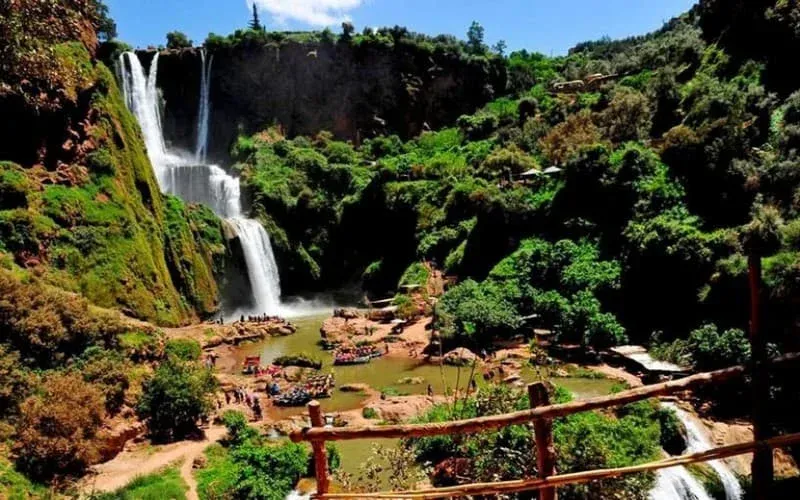
While the Atlas Mountains offer cultural and scenic diversity, Ouzoud Waterfalls provide a more focused natural spectacle Morocco’s highest and most impressive waterfalls, where the Ouzoud River plunges 110 meters over red-rock cliffs in multiple spectacular cascades. Located approximately 150 kilometers northeast of Marrakech in the Middle Atlas foothills, Ouzoud requires longer travel time than Ourika but rewards with more dramatic water features and unique wildlife encounters.
The Ouzoud Experience
The journey to Ouzoud crosses diverse landscapes leaving Marrakech through agricultural plains planted with olives and grains, passing through small towns reflecting rural Moroccan life, and eventually entering increasingly hilly terrain as the Middle Atlas approaches. The drive takes approximately 2.5-3 hours each direction, consuming significant portions of day-trip time but offering windows into rural Morocco that city-bound tourists rarely witness.
Arrival at Ouzoud village marks the beginning of exploration. The waterfall complex spreads across multiple tiers and viewpoints, with trails descending to the base pool and climbing to upper cascades. Well-maintained paths accommodate various fitness levels, though steep sections and numerous steps require reasonable mobility. The most impressive views come from the base, where the full height and power of falling water becomes apparent, particularly during spring when snowmelt swells the river.
Unique to Ouzoud are resident troops of Barbary macaques , North Africa’s only monkey species that inhabit the surrounding cliffs and trees. These habituated troops tolerate human presence, often approaching pathways and restaurant areas seeking food. While delightful to observe, visitors should maintain appropriate distance and never feed the monkeys despite their begging behaviors and what local vendors might encourage.
The waterfall generates continuous mist that sustains lush vegetation in the immediate area, creating microclimate conditions supporting plants that couldn’t survive in the drier surrounding landscape. This green oasis environment provides pleasant picnic settings and photographic opportunities, particularly when rainbows form in the mist during afternoon sunlight.
Activities and Dining at Ouzoud
Beyond simple waterfall viewing, Ouzoud offers several activity options. Traditional wooden boats provide rides to the base of the falls, allowing unique perspectives and photo angles impossible from shore. The ride costs minimal fees (20-30 MAD) and appeals particularly to children or those seeking closer water proximity without swimming.
Swimming is possible in pools at the waterfall base, though water temperatures remain cold year-round due to mountain sources. Summer visitors often brave the chill for refreshing swims, while spring and winter temperatures deter all but the hardiest swimmers. Local entrepreneurs rent out basic changing facilities and sell refreshments to swimmers.
The village surrounding the falls has developed considerable tourism infrastructure including numerous restaurants serving traditional Moroccan cuisine with waterfall views. Most day trips include lunch at these establishments, where tagines, couscous, and grilled meats appear on every menu alongside less traditional options catering to international palates. Quality varies between restaurants; those on upper terraces generally offer better views while lower establishments provide closer waterfall proximity.
Hiking trails extend beyond the immediate waterfall area to olive groves, traditional mills powered by water channels, and viewpoints offering panoramic valley perspectives. These extended walks appeal to active travelers with time and energy after exploring the main cascades, though most day-trippers focus exclusively on the waterfall itself given limited time.
Tour Options and Logistics
Ouzoud day trips from Marrakech typically depart early morning (8:00-8:30 AM) and return late afternoon or early evening (6:00-7:00 PM), creating full-day commitments. Shared group tours represent the most economical option at 200-350 MAD per person including transportation and sometimes lunch. These collect multiple travelers, potentially slowing departure and limiting flexibility but providing social dynamics and cost efficiency.
Private tours offer greater flexibility, personalized pacing, and the ability to adjust itineraries based on interests. Costs run 800-1,500 MAD for the vehicle regardless of passenger numbers, making private options economical for families or groups of four or more. Private tours can incorporate additional stops at cooperative women’s argan oil production facilities or rural markets when scheduling permits.
Self-driving to Ouzoud is possible for experienced drivers comfortable navigating Moroccan roads. The route follows well-maintained highways initially before transitioning to narrower mountain roads requiring attention but no special skills. Rental cars provide maximum flexibility but eliminate the value of local guide knowledge and create parking challenges during high-season crowding.
Choosing Between Atlas Mountains and Ouzoud
Travelers with limited Marrakech time often face difficult choices between these two exceptional day trips. Several factors should influence decisions. The Atlas Mountains, particularly Ourika Valley, require less travel time (1.5-2 hours round trip driving versus 5-6 hours for Ouzoud), leaving more time for actual exploration. This makes Atlas trips better suited for travelers with only partial days available or those prioritizing time efficiency.
Ouzoud delivers more dramatic singular spectacles; the waterfalls impress more universally than any individual Atlas feature, making it ideal for travelers seeking specific natural wonders to photograph and experience. The monkey populations add unique wildlife elements absent from most Atlas day trips.
Cultural immersion favors Atlas Mountains visits, where extended time in Berber villages, multiple stops, and varied landscapes provide broader Morocco perspectives than Ouzoud’s more focused waterfall experience. Photography enthusiasts might prefer Atlas trips for landscape diversity, while Ouzoud’s concentrated beauty suits those wanting fewer locations explored more thoroughly.
Physical requirements differ slightly Ouzoud involves more continuous stair climbing and steeper descents, while Atlas trips distribute walking across flatter valley paths and optional hikes. Neither demands serious fitness, but mobility-challenged travelers might find Atlas routes more accommodating.
Maximizing Day Trip Experiences
Regardless of chosen destination, several strategies maximize day trip value. Early departures beat crowds and provide better lighting for photography, particularly important at popular locations like Setti Fatma and Ouzoud. Weekends see higher visitor numbers, especially from domestic tourists, making weekday trips preferable when possible.
Appropriate clothing and footwear prove essential comfortable walking shoes with good traction, layers for temperature variations, and sun protection for exposed areas. Atlas trips might require warmer clothing at altitude, while Ouzoud’s mist zones can soak light clothing.
Realistic expectations prevent disappointment. Day trips provide introductions rather than comprehensive experiences. The limited time means surface-level engagement deeper mountain immersion or waterfall area exploration requires overnight stays. View day trips as reconnaissance for potential longer visits or accept them as concentrated highlights within broader Morocco itineraries.
Cultural sensitivity enhances interactions. When visiting Berber homes, respect photography restrictions, purchase small items supporting families, and engage genuinely rather than treating communities as exhibits. Tipping guides and accepting tea hospitality acknowledges the cultural exchange occurring beyond simple tourism transactions.
Conclusion
Both Atlas Mountains day trips from Marrakech and ouzoud waterfalls day trip excursions deliver exceptional escapes from urban intensity, revealing Morocco’s natural beauty and traditional cultures thriving beyond the cities. The Atlas Mountains offer greater diversity and cultural depth across villages, valleys, and mountain passes that showcase how Berber communities have adapted to challenging environments. Ouzoud provides more concentrated natural drama through spectacular waterfalls and unique wildlife encounters that create instantly memorable moments.
The ideal choice depends on personal interests, available time, and what aspects of Morocco appeal most. Active travelers seeking varied experiences and cultural interaction lean toward Atlas trips, while those wanting specific natural wonders and wildlife photography prioritize Ouzoud. Many travelers ultimately do both, recognizing that each offers distinct rewards justifying the time and modest expense.
These day trips succeed not just through scenic beauty but by providing perspectives on Morocco beyond Marrakech’s intense medina experience. They reveal how geography shapes culture, how traditional lifestyles persist despite modernization, and how Morocco’s extraordinary landscape diversity creates the foundation for its rich cultural heritage.
Key Takeaways
Proximity Versus Spectacle Trade-offs Atlas Mountains trips from Marrakech require less travel time (2-3 hours round trip) allowing more exploration, while Ouzoud demands 5-6 hours driving for more concentrated waterfall drama. Choose based on whether you prefer varied experiences across limited geography or focused natural spectacles worth longer journeys.
Cultural Immersion Favors Atlas Mountains Atlas day trips provide broader cultural exposure through multiple Berber villages, traditional homes, local markets, and extended interaction with mountain communities. Ouzoud focuses primarily on natural beauty with limited cultural elements beyond restaurant interactions and village tourism infrastructure.
Seasonal Timing Dramatically Affects Experiences Spring offers optimal conditions for both destinations full water flow, moderate temperatures, wildflowers, and comfortable hiking. Summer provides temperature relief but reduced water volume. Winter adds scenic snow to Atlas peaks but may close high passes and creates cold swimming conditions at Ouzoud.
Physical Requirements Remain Moderate Neither trip demands exceptional fitness, but Ouzoud involves more concentrated stair climbing and steep descents to waterfall base. Atlas trips distribute activity across gentler valley walks with optional challenging hikes. Both require proper footwear and reasonable mobility for safe enjoyment.
Private Tours Justify Costs for Groups While shared tours offer budget efficiency for solo travelers or couples, private options become economical for families or groups of four or more. The flexibility, personalized pacing, and ability to add stops or adjust schedules justify premium pricing when costs spread across multiple participants.
Early Departures Beat Crowds and Heat Morning starts for either trip provide cooler temperatures, better photography lighting, and arrival before peak crowds. This matters particularly at popular sites like Setti Fatma waterfalls and Ouzoud, where afternoon congestion diminishes experience quality and creates parking challenges.