

Eight days represents the ideal timeframe for experiencing Morocco’s extraordinary diversity without feeling rushed. Starting from Marrakech, this duration allows travelers to explore imperial cities steeped in history, traverse the dramatic Atlas Mountains, sleep under stars in the Sahara Desert, wander through blue-painted villages, and discover coastal medinas all while maintaining a sustainable pace that balances adventure with relaxation. This comprehensive guide presents a strategic eight-day itinerary designed to maximize Morocco’s highlights while respecting the travel rhythms that make journeys memorable rather than merely efficient.
Strategic Planning: The Foundation of Success
An effective Morocco Itinerary 8 Days from Marrakech requires careful route planning to minimize backtracking while capturing the country’s geographic and cultural diversity. The most popular configuration follows a grand loop: Marrakech to the desert via the High Atlas, north to Fes through the Middle Atlas, west to Chefchaouen in the Rif Mountains, and either returning to Marrakech or concluding in Casablanca for convenient international departures.
This circular routing showcases Morocco’s remarkable variety from desert dunes exceeding 150 meters in height to cedar forests inhabited by Barbary macaques, from medieval medinas with labyrinthine souks to modern cities with Art Deco boulevards. The journey’s progression creates a natural narrative arc, with each day’s landscapes and experiences contrasting with the previous, maintaining engagement throughout the week.
Timing considerations prove crucial. The itinerary works year-round but spring and autumn offer optimal conditions across all regions. Summer brings intense desert heat that some find challenging, while winter can close high mountain passes after snowfall. Cultural events like Ramadan affect restaurant hours and local rhythms, requiring modest adjustments but not preventing travel.
Days 1-2: Marrakech Exploration and Orientation
Beginning the journey with two full days in Marrakech allows for acclimatization and thorough exploration of Morocco’s most visited city. The first day should focus on the medina’s essential sites: Jemaa el-Fnaa square with its nightly transformation into an open-air theater of storytellers, musicians, and food stalls; the Koutoubia Mosque whose minaret has dominated the skyline since the 12th century; and the labyrinthine souks where artisans continue centuries-old crafts.
Day two enables deeper exploration of Marrakech’s cultural treasures. The Bahia Palace showcases 19th-century Moroccan architecture with zellige tilework and carved cedar ceilings. The Saadian Tombs, rediscovered in 1917, contain ornate mausoleums from Morocco’s golden age. The Majorelle Garden, restored by Yves Saint Laurent, offers tranquil respite with its cobalt blue buildings and exotic plant collections.
These initial days also serve practical purposes: adjusting to Moroccan customs, practicing basic bargaining etiquette, sampling diverse cuisine from street food to refined restaurant preparations, and organizing any last-minute provisions for the desert journey ahead. Evening meals on rooftop terraces overlooking the medina’s chaos provide perfect reflection opportunities before departing civilization’s comforts.
Day 3: Atlas Mountains to Dades Valley
The desert journey begins with an early departure across the High Atlas via Tizi n’Tichka pass. This mountain crossing, reaching over 2,260 meters, provides spectacular scenery as the route winds through Berber villages where traditional lifestyles persist despite modern influences. Strategic photo stops capture panoramic views where snow-capped peaks loom above terraced agricultural valleys.
Ait Benhaddou, a UNESCO World Heritage Site, deserves extended exploration. This fortified village’s earthen architecture has provided backdrops for numerous films, but its real significance lies in representing sustainable building techniques perfected over generations. Climbing to the hilltop granary rewards visitors with comprehensive views of the ksar and surrounding palmery.
The journey continues through Ouarzazate and the Valley of Roses toward Dades Valley. The landscape transforms progressively from mountains to semi-arid plateaus dotted with kasbahs that once controlled caravan routes. Dades Gorge, with its distinctive rock formations and riverside setting, provides the night’s accommodation in a traditional kasbah converted to a guesthouse.
Day 4: Todra Gorge and Merzouga Desert
Morning exploration of Todra Gorge reveals vertical limestone cliffs rising 300 meters above a narrow canyon floor. The cool microclimate and perennial water flow create an oasis environment contrasting sharply with surrounding aridness. Local guides offer rock climbing experiences for adventurous travelers, while others enjoy the scenic walk through this natural wonder.
The afternoon drive to Merzouga passes through Erfoud, known for fossil workshops where artisans polish ancient marine creatures into decorative objects and furniture. The Ziz Valley’s millions of date palms create a green corridor through barren landscape, illustrating how desert civilizations depend entirely on water management.
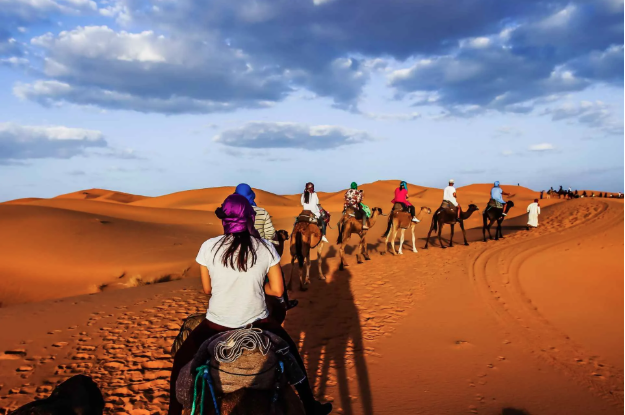
Arrival in Merzouga marks the transition to pure desert. After settling at a hotel near Erg Chebbi dunes, the evening camel trek carries travelers into the sand sea for sunset and overnight camping. The Berber camp experiences traditional tents, communal tagine dinners, drumming around campfires, and sleeping beneath unpolluted stars often becomes the trip’s emotional centerpiece.
Day 5: Desert Sunrise to Fes
Rising before dawn allows witnessing sunrise from a high dune, when low-angle light reveals the sand’s texture and gradations invisible at midday. After breakfast and camel return, the long drive to Fes begins, passing through the Middle Atlas Mountains where cedar forests and alpine meadows replace desert scenery.
The route includes Ifrane, a planned town with European architecture that earned the nickname “Morocco’s Switzerland.” Nearby forests shelter Barbary macaques, and designated stops allow safe interaction with these habituated troops. The dramatic elevation and vegetation changes encountered in this single day illustrate Morocco’s compressed biodiversity.
Arrival in Fes by evening allows for initial orientation in Morocco’s oldest imperial city. The medina, a UNESCO site and reputedly the world’s largest car-free urban zone, presents a striking contrast to everything experienced so far.
Day 6: Fes Cultural Immersion
Fes demands a full day to appreciate its medieval medina, ancient universities, and traditional crafts. Hiring a licensed guide proves essential the medina’s 9,000+ alleyways defeat even experienced travelers, and guides provide historical context and craft workshop access that independent exploration cannot match.
Essential visits include the Al-Qarawiyyin University, founded in 859 and recognized as the world’s oldest continuously operating educational institution; the Chouara Tannery where leather dyeing follows techniques unchanged for centuries; and the Nejjarine Museum of Wooden Arts. The Bou Inania Madrasa showcases Islamic architectural brilliance with intricate plasterwork, zellige mosaics, and carved cedar.
Evening hours allow for independent souk exploration, searching for ceramics, textiles, or metalwork that Fes artisans have perfected over generations. The city’s culinary traditions also merit attention, with dishes like pastilla and rfissa representing regional specialties rarely found elsewhere.
Day 7: Fes to Chefchaouen
The journey to Chefchaouen traverses the Rif Mountains, revealing yet another geographic facet of Morocco’s diversity. This drive, approximately five hours, passes through agricultural landscapes and forested hillsides before reaching the blue city nestled in mountain valleys.
Chefchaouen’s distinctive blue-washed buildings create one of Morocco’s most photographed settings. The afternoon and evening allow wandering the compact medina, photographing blue doorways and alleyways, shopping for distinctive Rif textiles and handicrafts, and enjoying the relaxed atmosphere that sets Chefchaouen apart from larger imperial cities.
The town’s Spanish influences, visible in architecture and place names, reflect its founding by Andalusian refugees fleeing the Reconquista. Mountain hikes to the Spanish Mosque or waterfalls provide options for active travelers, while others simply enjoy cafe culture in Plaza Uta el-Hammam.
Day 8: Return to Marrakech or Casablanca
The final day involves significant driving either returning to Marrakech (approximately 7-8 hours) or proceeding to Casablanca (4-5 hours) for international flights. The Casablanca option allows brief exploration of Hassan II Mosque, one of the world’s largest mosques and among few in Morocco open to non-Muslim visitors.
For those returning to Marrakech, the route through Meknes offers opportunities to visit another imperial city and the nearby Roman ruins of Volubilis, Morocco’s best-preserved archaeological site. This addition enriches the historical understanding of Morocco’s layered past, from Roman colonization through Islamic dynasties to the present.
Practical Considerations and Logistics
This eight-day itinerary works best as a guided tour or with hired driver, as the distances and route complexity challenge self-drive attempts for first-time Morocco visitors. Accommodation should be pre-booked, especially during peak seasons when popular riads and desert camps fill quickly.
Budget allocation should account for guided tours in Fes and Marrakech, entrance fees to major sites, meals beyond those included in accommodation, and shopping opportunities. Morocco remains relatively affordable, but quality experiences require reasonable investment in reputable guides and comfortable transport.
Conclusion
An
Eight days represents the ideal timeframe for experiencing Morocco’s extraordinary diversity without feeling rushed. Starting from Marrakech, this duration allows travelers to explore imperial cities steeped in history, traverse the dramatic Atlas Mountains, sleep under stars in the Sahara Desert, wander through blue-painted villages, and discover coastal medinas all while maintaining a sustainable pace that balances adventure with relaxation. This comprehensive guide presents a strategic eight-day itinerary designed to maximize Morocco’s highlights while respecting the travel rhythms that make journeys memorable rather than merely efficient.
Strategic Planning: The Foundation of Success
An effective Morocco Itinerary 8 Days from Marrakech requires careful route planning to minimize backtracking while capturing the country’s geographic and cultural diversity. The most popular configuration follows a grand loop: Marrakech to the desert via the High Atlas, north to Fes through the Middle Atlas, west to Chefchaouen in the Rif Mountains, and either returning to Marrakech or concluding in Casablanca for convenient international departures.
This circular routing showcases Morocco’s remarkable variety from desert dunes exceeding 150 meters in height to cedar forests inhabited by Barbary macaques, from medieval medinas with labyrinthine souks to modern cities with Art Deco boulevards. The journey’s progression creates a natural narrative arc, with each day’s landscapes and experiences contrasting with the previous, maintaining engagement throughout the week.
Timing considerations prove crucial. The itinerary works year-round but spring and autumn offer optimal conditions across all regions. Summer brings intense desert heat that some find challenging, while winter can close high mountain passes after snowfall. Cultural events like Ramadan affect restaurant hours and local rhythms, requiring modest adjustments but not preventing travel.
Days 1-2: Marrakech Exploration and Orientation
Beginning the journey with two full days in Marrakech allows for acclimatization and thorough exploration of Morocco’s most visited city. The first day should focus on the medina’s essential sites: Jemaa el-Fnaa square with its nightly transformation into an open-air theater of storytellers, musicians, and food stalls; the Koutoubia Mosque whose minaret has dominated the skyline since the 12th century; and the labyrinthine souks where artisans continue centuries-old crafts.
Day two enables deeper exploration of Marrakech’s cultural treasures. The Bahia Palace showcases 19th-century Moroccan architecture with zellige tilework and carved cedar ceilings. The Saadian Tombs, rediscovered in 1917, contain ornate mausoleums from Morocco’s golden age. The Majorelle Garden, restored by Yves Saint Laurent, offers tranquil respite with its cobalt blue buildings and exotic plant collections.
These initial days also serve practical purposes: adjusting to Moroccan customs, practicing basic bargaining etiquette, sampling diverse cuisine from street food to refined restaurant preparations, and organizing any last-minute provisions for the desert journey ahead. Evening meals on rooftop terraces overlooking the medina’s chaos provide perfect reflection opportunities before departing civilization’s comforts.
Day 3: Atlas Mountains to Dades Valley
The desert journey begins with an early departure across the High Atlas via Tizi n’Tichka pass. This mountain crossing, reaching over 2,260 meters, provides spectacular scenery as the route winds through Berber villages where traditional lifestyles persist despite modern influences. Strategic photo stops capture panoramic views where snow-capped peaks loom above terraced agricultural valleys.
Ait Benhaddou, a UNESCO World Heritage Site, deserves extended exploration. This fortified village’s earthen architecture has provided backdrops for numerous films, but its real significance lies in representing sustainable building techniques perfected over generations. Climbing to the hilltop granary rewards visitors with comprehensive views of the ksar and surrounding palmery.
The journey continues through Ouarzazate and the Valley of Roses toward Dades Valley. The landscape transforms progressively from mountains to semi-arid plateaus dotted with kasbahs that once controlled caravan routes. Dades Gorge, with its distinctive rock formations and riverside setting, provides the night’s accommodation in a traditional kasbah converted to a guesthouse.
Day 4: Todra Gorge and Merzouga Desert
Morning exploration of Todra Gorge reveals vertical limestone cliffs rising 300 meters above a narrow canyon floor. The cool microclimate and perennial water flow create an oasis environment contrasting sharply with surrounding aridness. Local guides offer rock climbing experiences for adventurous travelers, while others enjoy the scenic walk through this natural wonder.
The afternoon drive to Merzouga passes through Erfoud, known for fossil workshops where artisans polish ancient marine creatures into decorative objects and furniture. The Ziz Valley’s millions of date palms create a green corridor through barren landscape, illustrating how desert civilizations depend entirely on water management.
Arrival in Merzouga marks the transition to pure desert. After settling at a hotel near Erg Chebbi dunes, the evening camel trek carries travelers into the sand sea for sunset and overnight camping. The Berber camp experiences traditional tents, communal tagine dinners, drumming around campfires, and sleeping beneath unpolluted stars often becomes the trip’s emotional centerpiece.
Day 5: Desert Sunrise to Fes
Rising before dawn allows witnessing sunrise from a high dune, when low-angle light reveals the sand’s texture and gradations invisible at midday. After breakfast and camel return, the long drive to Fes begins, passing through the Middle Atlas Mountains where cedar forests and alpine meadows replace desert scenery.
The route includes Ifrane, a planned town with European architecture that earned the nickname “Morocco’s Switzerland.” Nearby forests shelter Barbary macaques, and designated stops allow safe interaction with these habituated troops. The dramatic elevation and vegetation changes encountered in this single day illustrate Morocco’s compressed biodiversity.
Arrival in Fes by evening allows for initial orientation in Morocco’s oldest imperial city. The medina, a UNESCO site and reputedly the world’s largest car-free urban zone, presents a striking contrast to everything experienced so far.
Day 6: Fes Cultural Immersion
Fes demands a full day to appreciate its medieval medina, ancient universities, and traditional crafts. Hiring a licensed guide proves essential the medina’s 9,000+ alleyways defeat even experienced travelers, and guides provide historical context and craft workshop access that independent exploration cannot match.
Essential visits include the Al-Qarawiyyin University, founded in 859 and recognized as the world’s oldest continuously operating educational institution; the Chouara Tannery where leather dyeing follows techniques unchanged for centuries; and the Nejjarine Museum of Wooden Arts. The Bou Inania Madrasa showcases Islamic architectural brilliance with intricate plasterwork, zellige mosaics, and carved cedar.
Evening hours allow for independent souk exploration, searching for ceramics, textiles, or metalwork that Fes artisans have perfected over generations. The city’s culinary traditions also merit attention, with dishes like pastilla and rfissa representing regional specialties rarely found elsewhere.
Day 7: Fes to Chefchaouen
The journey to Chefchaouen traverses the Rif Mountains, revealing yet another geographic facet of Morocco’s diversity. This drive, approximately five hours, passes through agricultural landscapes and forested hillsides before reaching the blue city nestled in mountain valleys.
Chefchaouen’s distinctive blue-washed buildings create one of Morocco’s most photographed settings. The afternoon and evening allow wandering the compact medina, photographing blue doorways and alleyways, shopping for distinctive Rif textiles and handicrafts, and enjoying the relaxed atmosphere that sets Chefchaouen apart from larger imperial cities.
The town’s Spanish influences, visible in architecture and place names, reflect its founding by Andalusian refugees fleeing the Reconquista. Mountain hikes to the Spanish Mosque or waterfalls provide options for active travelers, while others simply enjoy cafe culture in Plaza Uta el-Hammam.
Day 8: Return to Marrakech or Casablanca
The final day involves significant driving either returning to Marrakech (approximately 7-8 hours) or proceeding to Casablanca (4-5 hours) for international flights. The Casablanca option allows brief exploration of Hassan II Mosque, one of the world’s largest mosques and among few in Morocco open to non-Muslim visitors.
For those returning to Marrakech, the route through Meknes offers opportunities to visit another imperial city and the nearby Roman ruins of Volubilis, Morocco’s best-preserved archaeological site. This addition enriches the historical understanding of Morocco’s layered past, from Roman colonization through Islamic dynasties to the present.
Practical Considerations and Logistics
This eight-day itinerary works best as a guided tour or with hired driver, as the distances and route complexity challenge self-drive attempts for first-time Morocco visitors. Accommodation should be pre-booked, especially during peak seasons when popular riads and desert camps fill quickly.
Budget allocation should account for guided tours in Fes and Marrakech, entrance fees to major sites, meals beyond those included in accommodation, and shopping opportunities. Morocco remains relatively affordable, but quality experiences require reasonable investment in reputable guides and comfortable transport.
Conclusion
An Morocco Itinerary 8 Days from Marrakech delivers comprehensive exposure to North Africa’s most accessible and diverse country. The journey encompasses geographic extremes, cultural depth, historical continuity, and contemporary vitality that few destinations can match within similar timeframes.
This route’s success depends on balancing ambition with realism; attempting too much creates exhausting schedules that diminish enjoyment, while excessive caution means missing Morocco’s essential experiences. The suggested itinerary strikes this balance, providing variety and depth while allowing the spontaneous moments and unexpected encounters that often become travel’s most treasured memories.
Morocco rewards those who approach it with curiosity, patience, and openness to experiences beyond their comfort zones. Eight days proves sufficient to fall in love with this complex country, understand its cultural nuances, and leave already planning the return visit to explore regions this itinerary couldn’t accommodate.
Key Takeaways
Optimal Route Design The circular route from Marrakech through the desert to Fes, then Chefchaouen and back maximizes geographic diversity while minimizing backtracking. This progression showcases Morocco’s complete spectrum from desert to mountains to coast.
Time Allocation Balance Two days each in Marrakech and Fes allow proper exploration of these complex imperial cities, while single nights in transitional locations maintain forward momentum without feeling rushed.
Desert Experience Priority The overnight desert camp represents Morocco’s most distinctive experience for most travelers. Allocating sufficient time for camel treks, sunset/sunrise viewing, and Berber cultural interaction justifies the long drives required to reach Merzouga.
Professional Guidance Value Licensed guides in Fes and Marrakech unlock experiences and access impossible for independent travelers, while experienced drivers navigate challenging routes safely and efficiently.
Flexibility for Personal Interests The itinerary framework accommodates individual preferences adding extra mountain hiking, extending desert time, incorporating cooking classes, or emphasizing shopping opportunities by adjusting daily schedules within the overall structure.
Seasonal Timing Matters Spring (March-May) and autumn (September-November) provide optimal weather across all regions, while summer and winter require specific clothing and preparation for temperature extremes in desert and mountain areas respectively.
delivers comprehensive exposure to North Africa’s most accessible and diverse country. The journey encompasses geographic extremes, cultural depth, historical continuity, and contemporary vitality that few destinations can match within similar timeframes.
This route’s success depends on balancing ambition with realism; attempting too much creates exhausting schedules that diminish enjoyment, while excessive caution means missing Morocco’s essential experiences. The suggested itinerary strikes this balance, providing variety and depth while allowing the spontaneous moments and unexpected encounters that often become travel’s most treasured memories.
Morocco rewards those who approach it with curiosity, patience, and openness to experiences beyond their comfort zones. Eight days proves sufficient to fall in love with this complex country, understand its cultural nuances, and leave already planning the return visit to explore regions this itinerary couldn’t accommodate.
Key Takeaways
Optimal Route Design The circular route from Marrakech through the desert to Fes, then Chefchaouen and back maximizes geographic diversity while minimizing backtracking. This progression showcases Morocco’s complete spectrum from desert to mountains to coast.
Time Allocation Balance Two days each in Marrakech and Fes allow proper exploration of these complex imperial cities, while single nights in transitional locations maintain forward momentum without feeling rushed.
Desert Experience Priority The overnight desert camp represents Morocco’s most distinctive experience for most travelers. Allocating sufficient time for camel treks, sunset/sunrise viewing, and Berber cultural interaction justifies the long drives required to reach Merzouga.
Professional Guidance Value Licensed guides in Fes and Marrakech unlock experience and access impossible for independent travelers, while experienced drivers navigate challenging routes safely and efficiently.
Flexibility for Personal Interests The itinerary framework accommodates individual preferences adding extra mountain hiking, extending desert time, incorporating cooking classes, or emphasizing shopping opportunities by adjusting daily schedules within the overall structure.
Seasonal Timing Matters Spring (March-May) and autumn (September-November) provide optimal weather across all regions, while summer and winter require specific clothing and preparation for temperature extremes in desert and mountain areas respectively.