

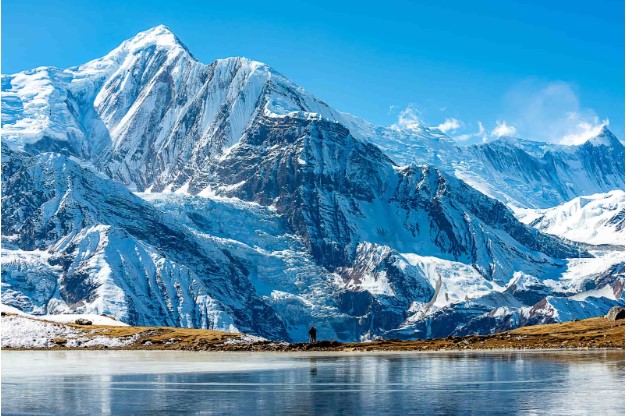
Widely celebrated as one of the world’s greatest long-distance treks, the Annapurna Circuit trek delivers an unparalleled journey through Nepal’s diverse landscapes and cultures. This legendary route circumnavigates the entire Annapurna massif, crossing climatic zones from subtropical lowlands to high-altitude desert terrain, passing through traditional villages where ancient customs persist unchanged, and culminating in the crossing of Thorong La Pass at 5,416 meters. For trekkers seeking the complete Himalayan experience—dramatic mountain panoramas, cultural immersion, physical challenge, and personal transformation—few adventures rival the scope and magnificence of the Annapurna Circuit.
A Trek of Legendary Status
Since opening to foreign visitors in 1977, the Annapurna Circuit trek has captivated adventurers worldwide, earning recognition as a bucket-list trek that combines accessibility with genuine wilderness character. The route’s fame stems from its extraordinary variety: trekkers experience humid river valleys, terraced agricultural landscapes, alpine forests, arid plateaus, and glacial environments all within a single journey. This ecological diversity, paired with the dramatic cultural transition from Hindu lowlands to Buddhist highlands, creates a multi-dimensional adventure that engages all senses.
The Annapurna Conservation Area, established in 1986, protects this remarkable region while implementing sustainable tourism practices that benefit local communities. This pioneering conservation model balances environmental protection with economic development, ensuring the circuit remains viable for future generations while supporting mountain populations through tourism revenue.
The Complete Circuit Experience
The classic Annapurna Circuit requires 15-20 days to complete, though variations exist for those with different time constraints or fitness levels. The traditional route begins in Besisahar or Bhulbhule in the Marshyangdi River valley, progressing counterclockwise around the massif before descending through the Kali Gandaki gorge—the world’s deepest—to conclude in Nayapul or Tatopani.
Recent road construction has altered the circuit’s character, with jeep tracks now reaching many previously remote villages. While purists lament this development, the roads provide options: trekkers can skip lower sections via vehicle transport or embrace the full walking experience, accepting occasional vehicle encounters as part of the circuit’s evolution. Most contemporary trekkers start from Jagat or Dharapani, shortening the journey while retaining the trek’s essential character.
The route’s counterclockwise direction serves strategic purposes. This orientation allows gradual altitude gain approaching Thorong La Pass, providing better acclimatization than the steeper ascent from the western side. Additionally, the prevailing afternoon winds blow from west to east, meaning climbers face favorable conditions when crossing the pass from the eastern approach.
Cultural Tapestry
The Annapurna Circuit functions as a cultural corridor where Hindu and Buddhist traditions converge. Lower valleys showcase Hindu culture with ornate temples, festivals celebrating various deities, and agricultural communities cultivating rice, millet, and vegetables on meticulously maintained terraces. Villages like Bahundanda and Jagat display traditional Gurung architecture with stone houses featuring carved wooden details.
Ascending toward Manang, the cultural landscape shifts perceptibly. Buddhist influence intensifies, evidenced by chortens marking trail junctures, mani walls inscribed with prayers, and gompas where monks maintain centuries-old spiritual practices. Manang village, situated at 3,540 meters, serves as the primary acclimatization hub and exemplifies this Tibetan Buddhist heritage with its flat-roofed buildings, prayer wheels, and monasteries.
The region’s inhabitants—Gurung, Thakali, and Manangba people—have adapted remarkably to harsh mountain conditions while maintaining distinctive cultural identities. Their warm hospitality transforms teahouses into social spaces where trekkers from diverse nations share stories, meals, and the universal language of mountain appreciation.
Thorong La: The Circuit’s Crown
Crossing Thorong La Pass represents the circuit’s defining challenge and most memorable achievement. At 5,416 meters, this high mountain pass demands proper acclimatization, physical fitness, and mental determination. Most trekkers spend several days in Manang, taking acclimatization hikes to places like Gangapurna Lake or Ice Lake to prepare their bodies for the altitude.
The standard approach involves trekking from Manang to Yak Kharka, then to Thorong Phedi or High Camp, positioning for an early morning summit attempt. Pass day typically commences around 3-4 AM, with headlamps illuminating the predawn ascent. The climb takes 5-7 hours from High Camp, with the final approach involving switchbacks up increasingly barren slopes where snow persists year-round.
The pass itself, marked by prayer flags snapping in the perpetual wind, offers breathtaking panoramas spanning countless peaks including Annapurna, Dhaulagiri, and the distinctive pyramid of Tilicho Peak. Despite the physical exhaustion, most trekkers linger, capturing photographs and savoring the accomplishment before beginning the long descent to Muktinath.
The descent, dropping over 1,600 meters to Muktinath, proves challenging on knees and quadriceps. This rapid altitude loss, while physiologically beneficial, demands careful footing on loose scree and steep switchbacks. Muktinath, a sacred pilgrimage site for both Hindus and Buddhists, provides welcome rest and marks the transition from the circuit’s challenging phase to the more relaxed Kali Gandaki section.
Ecological Transitions
The circuit’s ecological journey rivals its cultural diversity. Beginning in subtropical zones where banana trees and bamboo thrive, the trail ascends through temperate forests dominated by pine, oak, and magnificent rhododendron. Spring trekkers witness spectacular rhododendron blooms painting entire hillsides in crimson, pink, and white splendor.
Beyond Manang, vegetation diminishes dramatically as the landscape enters the rain shadow of the Annapurna and Dhaulagiri ranges. This arid zone resembles Tibetan plateau terrain, with sparse vegetation, wind-carved rock formations, and an almost desert-like quality. The contrast between the lush lower valleys and these barren highlands, experienced within days of walking, illustrates the dramatic influence of topography on climate and ecosystems.
Wildlife enthusiasts may spot Himalayan tahr on rocky slopes, blue sheep grazing at higher elevations, and if exceptionally fortunate, glimpse the elusive snow leopard. Bird species range from colorful Himalayan monals at mid-elevations to lammergeiers and golden eagles soaring above the passes.
Modern Realities and Adaptations
Contemporary trekkers enjoy significantly improved infrastructure compared to early circuit pioneers. Teahouses now offer comfortable beds, hot showers (for a fee), diverse menus, and even WiFi in many locations. This comfort evolution makes the trek accessible to broader audiences while potentially diminishing the wilderness experience purists seek.
The road development presents both advantages and challenges. Vehicles provide emergency evacuation options and supply transport, reducing porter loads and environmental impact. However, dust, noise, and the occasional need to step aside for passing jeeps detract from the pristine mountain experience. Savvy trekkers embrace flexibility, using vehicles strategically while maximizing time on footpaths away from roads.
Weather patterns increasingly show variability attributed to climate change, with traditional season predictions becoming less reliable. Spring (March-May) and autumn (October-November) remain optimal periods, offering stable weather and moderate temperatures. Monsoon trekking is possible on the circuit’s northern sections due to rain shadow effects, though southern approaches become muddy and leech-infested.
Preparation and Practicalities
Successful circuit completion requires moderate fitness and gradual conditioning. Regular cardiovascular exercise, leg strengthening, and practice hikes with a loaded pack prepare the body for consecutive days of walking 5-7 hours daily. Mental preparation matters equally—accepting discomfort, maintaining flexibility when plans change, and embracing challenges as part of the adventure enhances enjoyment.
Essential gear includes proper layering systems for temperature extremes, quality footwear for varied terrain, and a capable sleeping bag for cold nights at elevation. While teahouses provide meals and accommodation, carrying snacks, water purification, and basic medical supplies ensures self-sufficiency during long trail sections.
The Transformation
Beyond physical achievement, the Annapurna Circuit trek catalyzes personal growth. Extended time in the mountains strips away modern life’s complexities, reducing existence to fundamental elements: walking, eating, sleeping, and experiencing natural beauty. This simplicity creates space for reflection, perspective shifts, and connections with fellow trekkers that often endure beyond the trail.
The circuit challenges assumptions about personal limits, demonstrates the rewards of persistence through difficulty, and reveals that genuine adventure still exists in our mapped, connected world. Whether the circuit becomes a once-in-a-lifetime adventure or the beginning of a trekking passion, the experience leaves indelible impressions that continue resonating long after descending back to civilization.